What It Is and Key Specs
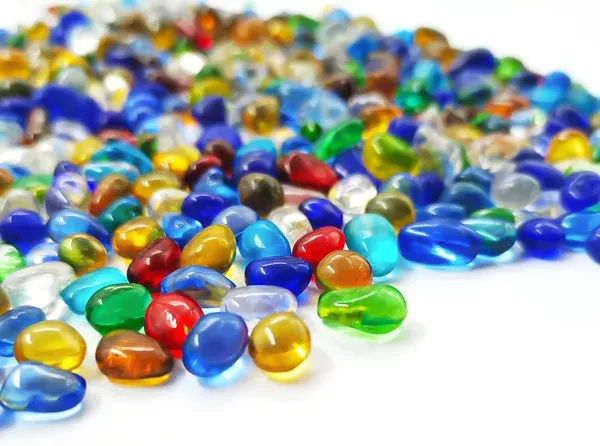
The Keedolla Colorful Clear Sea Glass Pebbles are small, irregularly shaped glass gems sized between 6–9mm (roughly 0.25"–0.35") and sold in a 0.93 lb pack with an approximate volume of 0.3 liters. The rainbow colorway blends multiple translucent hues in a single bag. According to the manufacturer's listing, the pebbles are produced from glass materials fired at high temperature, described as sturdy, durable, environmentally friendly, lead-free, non-toxic, and odorless.
The listing provides a useful sizing example: for a 6.3" × 6.3" tank footprint, one bag yields roughly 0.4" of substrate depth. Shoppers planning deeper substrate layers or larger tanks should plan on multiple bags accordingly.
Build Quality and Safety
Based on the manufacturer's product listing, the glass construction is a meaningful distinction in the colored aquarium gravel category. The listing explicitly states that "no dye or other methods of artificial coloring is used," positioning these pebbles as inherently colored glass rather than coated or painted stone. This matters: as noted by aquarium-keeping resource Aquifarm.com, artificially dyed or painted pebbles carry a real risk — "the paint or coating can chip off over time, releasing unknown chemicals into your tank," making high-quality colored glass a safer alternative to painted gravel (https://aquifarm.com/pebbles-in-aquarium/).
The manufacturer also describes the edges as smooth, noting they pose "no harm to animals and plants." The glass is characterized as lead-free and non-toxic — claims consistent with high-temperature glass production, though independent third-party certification is not referenced in the available listing information.
It is worth noting that a community discussion on FishLore (https://www.fishlore.com/aquariumfishforum/threads/difficulty-cleaning-colored-gravel.27770/) highlights a broader issue with colored aquarium gravels: persistent color leaching during rinsing. While that thread addresses dyed gravel specifically — a category Keedolla's listing says these pebbles do not belong to — it serves as a useful reminder that thorough rinsing before any aquarium use is a standard best practice regardless of substrate type.
Real-World Fit: Who It Suits, Who Should Skip
These pebbles are a reasonable fit for hobbyists decorating small freshwater aquariums, terrariums, turtle tanks, or plant pots where a colorful, translucent aesthetic is the goal. The manufacturer lists aquariums, potted plants, swimming pools, gardening, and home and craft decoration as intended applications, and the smooth, gem-like appearance lends itself well to vase fillers and DIY projects.
Shoppers should skip this product if they need a deep substrate layer for a larger tank without purchasing several bags — the 0.3-liter volume per pack is genuinely small, a limitation the listing itself flags with a candid note: "0.93LB Heavy Enough BUT SMALL BAG." Those seeking a natural, earth-toned substrate for planted tanks or biotope setups will also find the rainbow palette a poor stylistic match.
Honest Limitations
This review synthesizes the manufacturer listing and published aquarium-keeping sources — a few limitations are worth stating plainly:
- Coverage is limited. At 0.3 liters per pack, buyers needing even a modest 1" substrate layer across a standard 10-gallon tank footprint will require a significant number of bags. Budget and cart accordingly.
- No third-party safety certification cited. The lead-free and non-toxic claims appear in the manufacturer's listing but are not backed by referenced independent testing or certification documentation.
- Irregular sizing. The 6–9mm range means individual pieces vary noticeably — not a problem for decorative use, but worth knowing for applications where uniform coverage matters.
- Customer service is reactive, not proactive. The listing's after-service note directs buyers to contact the seller if quality problems arise, which is standard but places the burden on the buyer to identify and report issues.