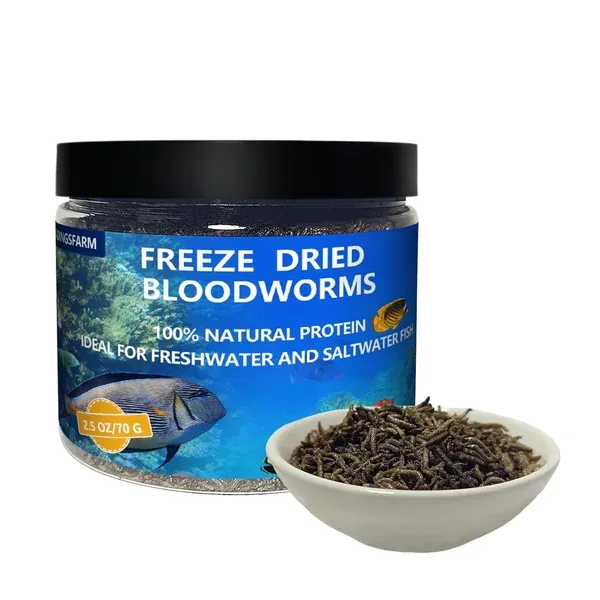
What It Is and Key Specs
JADINGSFRAM Freeze-Dried Bloodworms come in a 2.5 oz single-pack container and are marketed as a dietary supplement — not a staple — for small to medium aquarium fish. According to the manufacturer's listing, the worms are freeze-dried at peak freshness to preserve natural nutrition and original flavor, a process intended to replicate the appeal of live foods without the handling challenges.
The product is positioned as free from additives, preservatives, and artificial flavors, and is described as a source of protein, minerals, and multivitamins. Compatible species listed by the manufacturer span a notably broad range: Cichlids, Discus, Angelfish, Bettas, Koi, Tetras, Goldfish, Parrot Fish, Marine Fish, Axolotls, Snails, Shrimp, Flower Horns, Gourami, Loaches, Catfish, Guppies, Neon Fish, and Anthias.
Freeze-Drying: What the Technology Claims to Deliver
The manufacturer states that bloodworms are frozen at peak freshness, a common freeze-drying approach intended to retain nutritional integrity and palatability compared to shelf-stable processed foods. Community discussion on forums like SimplyDiscus notes that bloodworms are not particularly high in protein relative to their reputation, but that fish — discus in particular — tend to find them highly palatable. This aligns with the listing's emphasis on natural flavor retention as a key selling point of the freeze-drying method.
Real-World Fit: Who It Suits
This product is a reasonable option for hobbyists keeping a mixed community tank or species explicitly listed by the manufacturer — Bettas, Tetras, Guppies, Goldfish, and similar small-to-medium fish are frequently cited as good candidates for bloodworm supplementation. The recommended feeding schedule of two to three times per week, with only as much as fish can consume within three to five minutes, is consistent with responsible supplemental feeding practices.
Aquarists with smaller tanks or those who prefer the convenience of freeze-dried over frozen cube formats may find the format practical, as the manufacturer notes easy storage as a feature.
Who Should Proceed Carefully
Cichlid keepers in particular should approach bloodworm supplementation with caution. According to PetShun, overfeeding bloodworms can lead to health issues in cichlids — these worms are nutritious but can be fatty, contributing to obesity and digestive problems if fed in excess. Discussion threads on The Planted Tank Forum similarly flag that several cichlid species have longer digestive tracts and should be fed bloodworms sparingly. While the manufacturer does list Cichlids as a compatible species, buyers keeping these fish should treat bloodworms as an occasional treat rather than a frequent supplement, staying well within the listed feeding guidelines.
Honest Limitations
A few category-level and product-specific considerations are worth noting:
- Supplement, not staple: The manufacturer explicitly positions this as a supplement to an existing diet. Fish fed bloodworms exclusively — or too frequently — risk nutritional imbalance, particularly given community observations that bloodworms are not especially high in protein despite their reputation.
- Overfeeding risk is real: The three-to-five-minute consumption rule exists for a reason. Uneaten freeze-dried food can quickly degrade water quality, a risk common across this product type.
- Species breadth warrants scrutiny: The compatible species list is very wide, spanning freshwater, saltwater, invertebrates, and even reptiles (turtles). Buyers should verify suitability for their specific species, particularly for more sensitive or specialized inhabitants like Axolotls or Marine Fish, rather than relying solely on the listing.
- No third-party nutritional verification is referenced in the manufacturer's materials, so the specific protein, mineral, and vitamin claims cannot be independently confirmed from the available sources.
Reader Reception
Aggregate reader ratings on the product listing reflect the general community experience and should be consulted directly on the product page for the most current picture.
---
This review synthesizes the manufacturer's listing information and published aquarium community sources. No hands-on evaluation was conducted.