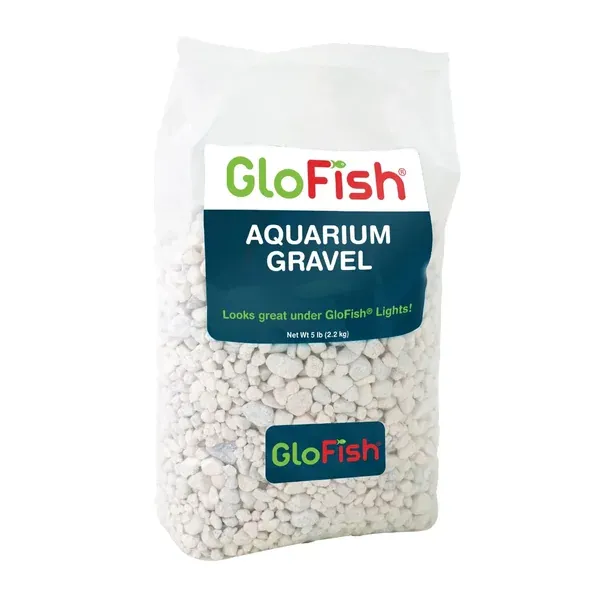
What It Is and Key Specs
GloFish Aquarium Gravel is a decorative aquarium substrate produced by GloFish, the brand best known for its line of fluorescent fish and coordinated tank accessories. The White Frost variant ships in a 5-pound bag and carries item number 29022. According to the manufacturer, the gravel is "specially selected to stand out under the blue lighting in your GloFish aquarium," and the product line is available in pink, green, white, black with fluorescent highlights, and mixed-color options, giving hobbyists some flexibility in building a themed tank.
The gravel is marketed for dual use: as a primary substrate covering the tank floor, or as a decorative accent layered alongside other materials. GloFish recommends pairing it with GloFish plants and ornaments (sold separately) to create what the brand calls "a complete underwater fluorescent experience."
Build Quality and Safety Considerations
Third-party editorial coverage at
expertaquarist.com notes that GloFish Gravel is "coated without harmful chemicals," which aligns with the product's positioning as fish-safe. That said, a thread on the FishLore aquarium forum (
fishlore.com) documents an anecdotal concern about potential toxicity, though community consensus in that discussion pointed to other likely causes — specifically a newly introduced fish carrying disease — rather than the substrate itself. No formal recall or safety action by the U.S. Consumer Product Safety Commission (CPSC) appears in available sources for this product.
As with any coated aquarium gravel, hobbyists commonly recommend a thorough rinse before use to remove loose dust or residue, a standard precaution across the substrate category.
The core promise of this gravel is aesthetic: fluorescent-accented particles that react under GloFish's signature blue LED lighting. The manufacturer states the gravel "creates a colorful base for all your GloFish ornaments" and is "specially selected" to maximize that glow effect. The White Frost color is logically paired with a white-and-blue light aesthetic, where the pale gravel can amplify the cool-toned luminescence GloFish tanks are known for.
Readers appear to agree — the product holds a 4.6/5 aggregate across more than 15,155 Amazon ratings, a notably high volume that lends weight to the positive sentiment.
Real-World Fit: Who It Suits, Who Should Skip
Good fit: Aquarists who already own or are building a dedicated GloFish setup will find this gravel a natural, low-effort complement to the existing ecosystem of GloFish tanks, LED fixtures, plants, and ornaments. The range of color options also makes it accessible to hobbyists who want to customize their fluorescent theme.
Worth skipping: Those setting up natural-look biotope tanks, planted tanks requiring nutrient-rich substrates, or aquascapes will find little utility here. The gravel is purely decorative and does not appear to carry any nutritive or buffering properties suited to planted aquarium setups. Likewise, one source (
greg.app) notes that while the gravel is fish-safe, it tends to retain moisture and is therefore unsuitable for succulents — a minor but useful data point for anyone considering repurposing it for houseplants.
Honest Limitations
- Ecosystem lock-in: The product is explicitly designed around the GloFish brand experience. Hobbyists with mixed or non-GloFish tanks may find the fluorescent aesthetic clashes with other décor styles.
- No substrate functionality: This is a decorative gravel, not an active or buffering substrate. Planted tank keepers or those housing fish sensitive to water chemistry will need supplemental substrates.
- Anecdotal safety questions exist: While no formal safety findings surface in available sources, the FishLore forum thread shows that some hobbyists have raised toxicity questions. Current evidence does not substantiate that concern, but cautious aquarists may wish to monitor water parameters after initial setup.
- Sold in one bag size: At 5 pounds, larger tanks may require multiple bags, which adds to cost and makes it worth calculating coverage needs before purchasing.
Bottom Line
Based on the product listing, manufacturer information, and published coverage, GloFish Aquarium Gravel White Frost is a competent, purpose-built substrate for GloFish tanks that delivers on its central promise: a visually cohesive, glow-reactive base layer. Its 4.6/5 readers' aggregate across a large sample suggests broad satisfaction among its target audience. The limitations are real but largely predictable — this is a themed product for a themed tank, and it makes no claims to be otherwise.