What It Is and Key Specs
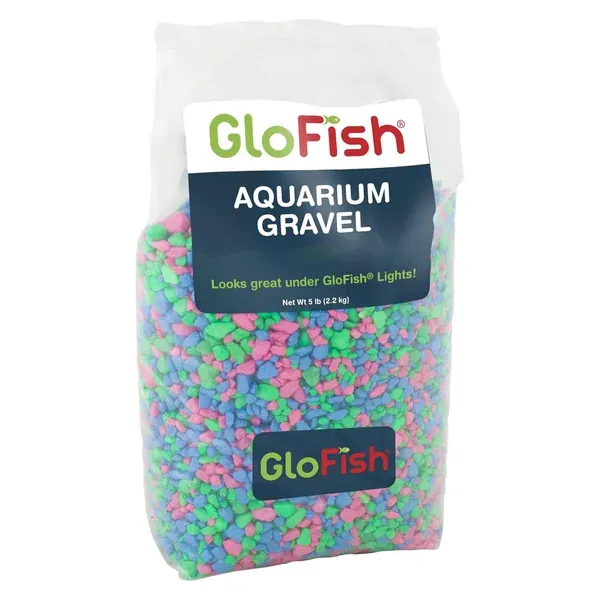
GloFish Aquarium Gravel is a themed substrate sold in a 5-pound bag measuring approximately 4 × 5 × 9 inches. The pink/green/blue mix is one of several colorway options — the manufacturer also offers pink, green, white, and black with fluorescent highlights as standalone choices. According to GloFish's own product page, the gravel is "specially selected to stand out under the blue lighting in your GloFish aquarium," making it a deliberate part of the brand's broader fluorescent ecosystem rather than a general-purpose aquarium substrate. The listing notes it can be used as a primary substrate or layered in as an accent alongside GloFish plants and ornaments, which are sold separately.
Build Quality and Safety
The manufacturer markets this gravel as aquarium-safe, and coverage from Expert Aquarist notes it is "coated without any harmful chemicals," presenting it as fish- and plant-friendly when used as intended. That said, a thread on the hobbyist forum FishLore does surface anecdotal concern about potential toxicity following fish loss, though the community response there leans toward other explanations — such as a hidden disease introduced alongside new fish — rather than the gravel itself. As with any new substrate, standard aquarium practice calls for thorough rinsing before use. No CPSC safety notice was identified in the available sources for this product.
The central appeal here is aesthetic: the fluorescent-accented stones are designed to react to GloFish blue LED lighting. Published coverage from Expert Aquarist describes the effect as "an absolute stunner" when paired with compatible equipment and décor. Reader reviews aggregated on Influenster reflect a 5/5 score across five published reviews, with one reviewer noting the black multi-color variant "looks great in our tank" and draws regular compliments — though five reviews is a thin sample and should be weighed accordingly. The glow effect is specifically engineered for GloFish-branded blue LED fixtures; performance under standard white aquarium lighting or non-GloFish LEDs is not addressed in the available sources.
Real-World Fit: Who It Suits and Who Should Skip It
This gravel makes the most sense for hobbyists already committed to the GloFish ecosystem — those running a GloFish tank with the brand's blue LED lighting and looking to complete the themed look. It is marketed as a complement to GloFish fish, plants, and ornaments, so buyers who enjoy coordinated, visually cohesive setups will get the most out of it.
Shoppers outside that niche should think carefully before purchasing. Planted tank enthusiasts who prioritize root nutrition will find that standard coated gravel — across this category generally — does not provide the nutrient profile of purpose-built planted substrates like aqua soil. Similarly, aquarists focused on natural biotope aesthetics or earth-tone designs are not the target audience. One creative use flagged in community discussion involves repurposing the gravel as a top dressing for houseplants, though sources note it retains moisture and is unsuitable for succulents or cacti in that context.
Honest Limitations
A few practical constraints are worth flagging before purchase:
- Ecosystem lock-in: The gravel's fluorescent effect is optimized for GloFish blue LED lighting specifically. Its visual impact in a generically lit tank is not documented in available sources.
- Weight and coverage: At 5 pounds, coverage depth will vary by tank footprint. Larger tanks may require multiple bags to achieve a consistent substrate layer, adding to overall cost.
- Thin independent review base: Published third-party reviews are limited in number, making it difficult to draw broad conclusions about long-term durability or color retention over time.
- Not a planted substrate: Nothing in the listing or manufacturer materials positions this as a nutrient-rich substrate. Hobbyists with live plants that require root feeding should plan for supplemental fertilization.
- Anecdotal toxicity concern: While community consensus and available coverage do not substantiate toxicity claims, the isolated forum discussion is worth noting — thorough pre-use rinsing is advisable as standard practice.