What It Is and Key Specs
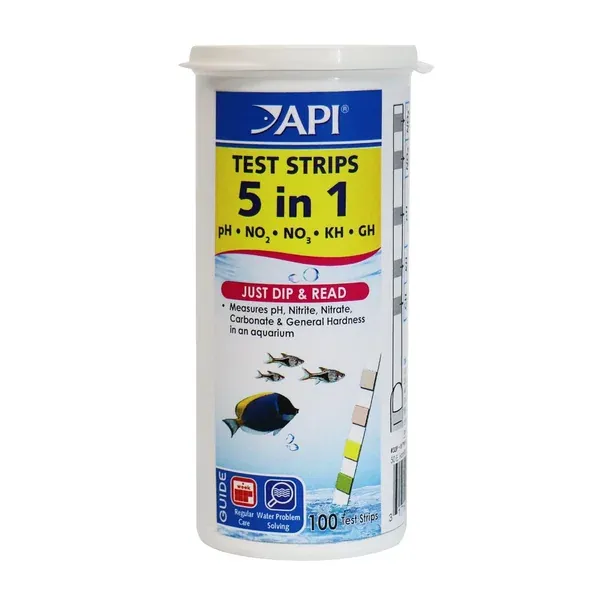
The API 5-in-1 Test Strips are designed for both freshwater and saltwater aquariums. Each strip tests five parameters in a single dip: pH, nitrite, nitrate, carbonate hardness (KH), and general hardness (GH). The box reviewed here contains 100 strips, making it the larger of API's count options — a practical choice for aquarists who follow a weekly testing schedule or who keep multiple tanks.
The test method is straightforward by design: dip a strip into aquarium water and compare the resulting colors against the included chart. According to the manufacturer, results are described as "fast and accurate," and published coverage from Feeders Pet Supply notes that the color charts are designed to be "distinctive, making test results easy to read," with built-in recommendations to help troubleshoot issues when something looks off.
Build Quality and Ease of Use
Strip-based testing is a well-established format in the aquarium hobby, and API is a widely recognized name in water-treatment products. The color-chart comparison approach requires no reagents, droppers, or waiting periods beyond the initial dip — an advantage for hobbyists who want a quick snapshot of water conditions during routine maintenance or when fish behavior suggests a problem.
Coverage from
reviewaqua.com describes the strips as "an essential tool for fish owners to maintain the health and well-being of their aquatic pets," a sentiment that aligns with the manufacturer's stated use case: weekly monitoring and reactive testing when water or fish problems appear.
Real-World Fit
Who this suits well:- Freshwater and saltwater aquarium keepers who want a single product covering five common parameters
- Hobbyists who test weekly and will benefit from the economy of a 100-count box over time
- Beginners who prefer a visual, chart-based system over liquid reagent test kits
Who may want to look elsewhere:- Aquarists who require laboratory-grade precision — strip tests across this category typically offer a useful approximation rather than exact numeric readings, and experienced hobbyists often pair or replace strips with liquid drop kits for parameters like ammonia, which is notably absent from this five-parameter panel
- Those with particularly demanding livestock (sensitive reef corals, for example) who may need tighter measurement tolerances than color-comparison strips can reliably provide
Honest Limitations
A few constraints are worth naming clearly:
- Ammonia is not tested. The five parameters covered are pH, nitrite, nitrate, carbonate hardness, and general hardness. Ammonia is one of the most critical parameters in a cycled tank — particularly during a new tank cycle — and this product does not address it. Buyers will need a separate test for ammonia monitoring.
- Color-chart subjectivity. Strip results depend on the user's ability to match colors accurately under consistent lighting. While published coverage notes the charts are designed to be distinctive, color-based interpretation can introduce variability between readings or between users.
- No troubleshooting beyond chart guidance. The included recommendations help identify problems in general terms, but complex water chemistry issues will likely require additional research or a more granular liquid test kit.
How It Compares in the Category
API offers this same five-parameter strip in a 25-count format, making the 100-count box the higher-volume option — relevant for buyers who intend to test weekly across one or more tanks, where a smaller box would be depleted quickly. Strip-based testing products across this tier commonly trade some precision for convenience; that trade-off is a category-wide characteristic rather than a flaw unique to this product.
Bottom Line
The API 5-in-1 Test Strips cover five relevant water parameters with a fast, low-complexity dip method and color-chart results designed to be easy to read and act on. The 100-count format suits regular testers well from a value standpoint. The key gap to plan around is ammonia — this product does not test for it, so a complete water-quality monitoring routine will require a supplementary test. For hobbyists who understand that limitation going in, these strips offer a practical tool for routine aquarium maintenance.