What It Is and Key Specs
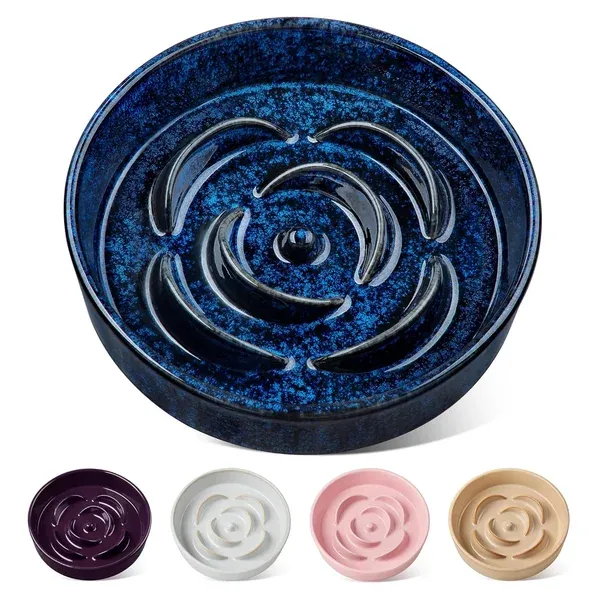
The vancasso Slow Feeder Dog Bowl is an 8.5-inch diameter ceramic bowl built specifically for medium breeds — the listing calls out Beagles, Border Collies, Australian Shepherds, Bulldogs, and Siberian Huskies as fitting examples. It holds 1.5 cups of dry food or 32 oz of water, and its raised ridges form a maze pattern that the manufacturer states can slow eating speed by up to 15x. The bowl weighs 2.4 lbs and is finished in a food-grade glazed ceramic. It carries a 4.7/5 readers' aggregate from 390 Amazon ratings.
Build Quality and Safety
Material choice is where this bowl makes its clearest case. The ceramic is described by the manufacturer as lead-free and cadmium-free, with a smooth, food-grade glazed finish. The listing notes that veterinarians recommend ceramic over plastic because a non-porous surface resists bacterial buildup that can trigger chin acne and skin irritation in pets.
At 2.4 lbs, the bowl is approximately six times heavier than a typical plastic alternative, according to the manufacturer. That mass, combined with a low-center-of-gravity design and a non-slip base, is intended to keep the bowl planted during enthusiastic mealtime activity — a claim supported by similar design language found in product details for other vancasso ceramic feeders (
petcinc.com). The glazed finish is also listed as dishwasher-safe and microwave-safe, and the seamless surface is marketed as easy to rinse clean under the tap.
The core functional proposition is the maze-pattern slow-feeder design. According to the manufacturer, the raised ridges force dogs to navigate around obstacles rather than gulp food freely, which is intended to help prevent bloat, improve digestion, and reduce the risk of choking and vomiting. The bowl is positioned as suitable for dry kibble, wet food, and raw diets.
Real-World Fit: Who It Suits, Who Should Skip
This bowl is sized for medium breeds in the range the listing describes. Owners of small dogs may find the 8.5-inch diameter oversized, while large or giant breeds will likely outgrow the 1.5-cup capacity quickly. It suits households looking to move away from plastic for material-safety reasons, or those whose medium dogs eat too fast and experience digestive discomfort as a result. The microwave-safe feature is a practical bonus for owners who serve warmed wet food.
Pet owners who prefer lightweight travel bowls or who need a larger capacity should look elsewhere. The 2.4-lb weight that keeps the bowl stable on the floor also makes it less practical for on-the-go use.
Honest Limitations
A few real-world considerations are worth keeping in mind. Slow feeder bowls with raised ridges and maze patterns — across the category broadly — are known to trap food particles in their crevices, which can promote bacterial growth if not cleaned thoroughly; as noted by slow-feeder specialists at
superfeedy.com, a brush or sponge is typically needed to scrub ridges and bumps properly, not just a simple rinse. The manufacturer's claim that the seamless glazed finish keeps cleanup "quick and effortless" is worth tempering with that category-level reality: the more complex the maze, the more diligent cleaning needs to be.
Additionally, the 15x eating-speed reduction is a manufacturer claim and has not been independently verified in published research cited in the available sources. Results will vary by individual dog temperament and food type.
The 1.5-cup capacity, while appropriate for portion control in medium breeds, means owners feeding larger meals will need to refill mid-sitting or consider a larger bowl.
Bottom Line
Based on the product listing and manufacturer information, the vancasso Slow Feeder Dog Bowl offers a credible combination of food-safe ceramic construction, meaningful weight for stability, and a maze design aimed at slowing fast eaters. The 4.7/5 readers' aggregate from 390 Amazon ratings suggests broad satisfaction among buyers. The primary trade-offs are the effort required to clean the ridged interior thoroughly and a capacity that caps out at medium-breed portion sizes.