What It Is and Key Specs
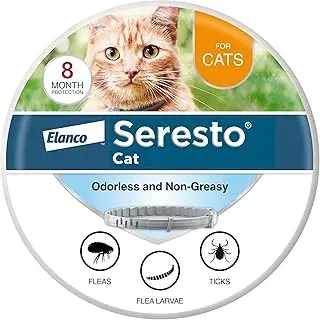
The Seresto Cat Collar is a long-duration flea and tick prevention collar designed for cats and kittens. According to the manufacturer, it delivers 8 continuous months of protection, killing and repelling fleas and ticks by contact — meaning pests don't have to bite your cat to die. The collar is described as non-greasy and easy to use, positioning itself as a low-maintenance alternative to monthly topical spot-on treatments.
Seresto is cited by the manufacturer as the #1 veterinarian recommended flea and tick collar, a claim supported by its prominent vet-recommended branding throughout the product listing.
Build Quality and Safety
The collar is marketed as a premium product that competes on efficacy without carrying an outsized price premium relative to the months of coverage it offers. It is designed to be hassle-free, which, based on manufacturer information, means no oily residue or monthly reapplication schedules — a practical advantage for cat owners who find topical treatments cumbersome.
Prospective buyers should review current CPSC and regulatory guidance on flea and tick collar products, as this category has attracted consumer safety scrutiny industry-wide. Checking the most up-to-date labeling and consulting a veterinarian before use is always advisable, particularly for kittens or cats with known sensitivities.
Efficacy and Real-World Expectations
According to the manufacturer, the Seresto collar starts working within 24 hours of application to kill and repel both fleas and ticks. The 8-month duration is the headline selling point, and for many cat owners that span covers the heaviest parts of flea and tick season without requiring a mid-season product swap.
However, published coverage from the brand's own resources notes an important real-world nuance: the full 8-month window is not guaranteed for every cat in every environment. Signs that the collar may need earlier replacement include the return of fleas or ticks before the period has elapsed — a candid acknowledgment that efficacy can vary based on infestation pressure, the cat's habits, and environmental conditions. Some veterinary offices also offer collar take-back programs, suggesting responsible disposal is a consideration worth planning for.
Reader Sentiment
Across nearly 45,000 Amazon ratings, readers award the Seresto Cat Collar a 4.5 out of 5 — a notably strong aggregate for a product in a category where individual results can vary widely. That volume of feedback suggests broad satisfaction, though individual experiences with any flea and tick product will depend on factors like local parasite populations and the specific cat's lifestyle.
Who It Suits — and Who Should Look Elsewhere
The Seresto collar is likely a good fit for:
- Cat owners who want a set-and-forget flea and tick solution without monthly reapplication
- Those whose cats resist topical treatments
- Households where vet endorsement is an important purchasing signal
It may be a less ideal choice for:
- Cats with known skin sensitivities or collar aversions
- Owners in areas with extremely high flea or tick pressure, where the 8-month efficacy window may fall short
- Those seeking a fully collar-free prevention approach (oral or injectable alternatives exist)
Honest Limitations
No flea and tick product is universally effective, and the Seresto collar is no exception. The manufacturer itself acknowledges that some cats may see flea or tick activity return before the 8-month mark, making it worth monitoring your pet rather than assuming full-cycle protection once the collar is on. Additionally, as with all flea and tick collars, proper fit and consistent wear are prerequisites for the product to perform as described — a collar that a cat frequently removes or that fits incorrectly will not deliver the stated duration of protection.