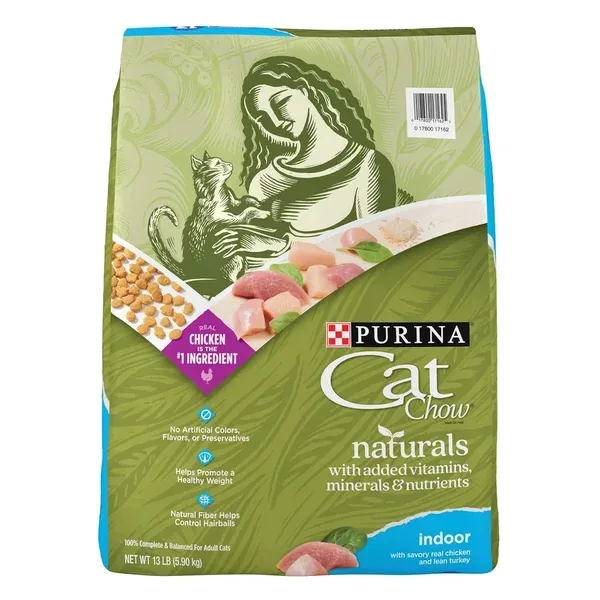
What It Is and Key Specs
Purina Cat Chow Naturals Indoor is a dry kibble formulated specifically for indoor cats. According to the manufacturer listing, the 13 lb. Bag delivers a multi-benefit formula targeting three common indoor-cat concerns: hairball control, healthy weight maintenance, and complete daily nutrition.
Key specifications from the listing and Purina's product page include:
- Primary protein: Real turkey and real chicken listed as the #1 ingredient
- Fiber: A natural fiber blend intended to help control hairballs
- Fatty acids: Omega-6 fatty acids formulated to support skin and coat health (per purina.com)
- Vitamins and minerals: 25 essential vitamins and minerals to support overall health
- Nutritional completeness: Described by the manufacturer as 100 percent complete and balanced nutrition
The formula is positioned at an accessible price point within Purina's broader Cat Chow lineup, making it one of the more widely available multi-benefit indoor formulas on the market.
Build Quality and Safety
This review synthesizes the product listing, manufacturer information, and published coverage rather than hands-on evaluation. Purina Cat Chow is produced by Nestlé Purina PetCare, a large-scale commercial manufacturer. Consumers who wish to verify any safety or recall history should consult the U.S. Consumer Product Safety Commission (CPSC) and the FDA's pet food recall database directly, as those records reflect the most current compliance status for any given product lot.
The Purina product page notes the use of farm-raised chicken and emphasizes formulation standards for the hairball and weight-management claims (
purina.com).
Real-World Fit
Who it suits: According to coverage from PawDiet (
pawdiet.com), customers report high satisfaction, with many noting the food is well-received by picky eaters and cats with sensitive stomachs. The combined hairball-control and weight-management positioning makes it a practical single-bag solution for multi-cat households where all cats share an indoor lifestyle.
Readers have given the product a 4.8 out of 5 aggregate rating across nearly 20,000 Amazon reviews — a volume that suggests the satisfaction is not limited to a small or self-selecting group.
Who may want to look elsewhere: Cats with protein sensitivities or dietary restrictions beyond what this formula addresses — such as grain-free requirements or urinary-health support — would be better served by a purpose-specific diet. The formula is also dry-only, so owners whose veterinarians recommend a wet or mixed diet for hydration purposes should factor that in.
Hairball Control: What the Sources Say
Purina describes hairball control cat foods as designed to "alleviate the discomfort of hairball formation" through dietary fiber (
purina.com). The natural fiber blend in this formula is the mechanism cited for that claim.
It is worth noting that a segment of published user commentary — including discussions sourced from veterinary Q&A platforms (
justanswer.com) — indicates that some cats using Purina hairball formulas experience increased choking or difficulty passing hairballs. These reports appear to represent a minority of users given the broader rating data, but they are a legitimate data point for owners whose cats have a history of severe hairball issues. Consulting a veterinarian before switching is always advisable in those cases.
Honest Limitations
- Dry-only format: No wet component means hydration depends entirely on separate water intake, which can be a concern for cats prone to urinary issues.
- Category-tier expectations: Value-tier dry foods in this category typically rely on a broader ingredient mix beyond the lead proteins — owners seeking a limited-ingredient or protein-first formulation throughout the entire ingredient list may prefer a premium-tier alternative.
- Hairball results vary: As noted above, manufacturer claims and most user reports are positive, but individual response to fiber-based hairball management is not universal.
- Weight management is supplemental: The healthy-weight claim is based on formulation and caloric density; portion control by the owner remains essential and is not replaced by the formula alone.