What It Is and Key Specs
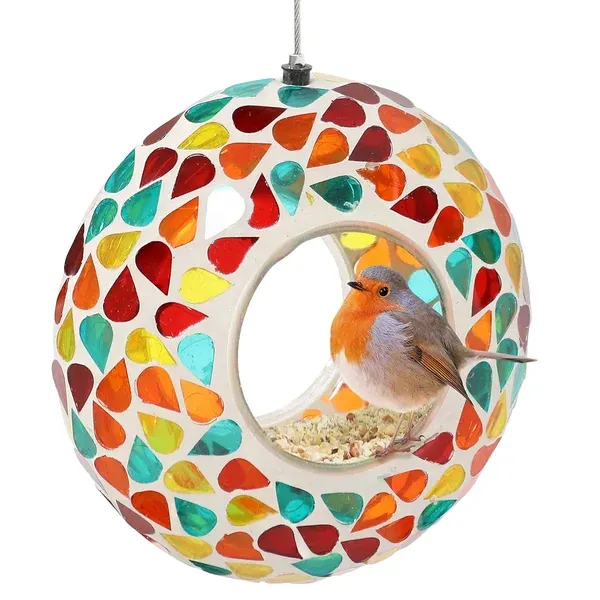
The Sunnydaze Confetti Mosaic Glass Hanging Bird Feeder is a small, round fly-through feeder constructed from mosaic glass. According to the manufacturer listing, it measures 6.5" W x 2.75" D x 6.5" H, weighs 1.2 lbs, and ships with a 12-inch hanging wire. The fly-through opening is 2.75" in diameter, accessible from two sides, and the feeder holds approximately 1 cup of small birdseed blend — with the listing noting that capacity may vary depending on seed type.
Per the manufacturer, the feeder is designed to attract a range of common backyard species including cardinals, finches, sparrows, and jays. The open fly-through design is intended to give birds easy access to seed, encouraging repeat visits.
Build Quality and Design
The feeder's construction centers on colorful mosaic glass, which according to Sunnydaze's own product coverage, "sparkles in the sunlight to attract wild birds and brings beauty to your landscape." The reflective, multi-colored surface serves a dual purpose: aesthetic appeal for the human observer and visual attraction for birds. The listing describes the feeder as weather-resistant, and a mesh-covered drainage hole at the bottom is included to help prevent moisture buildup and keep seed dry.
At 1.2 lbs, this is a lightweight fixture. The hanging wire is included in the box, though shoppers should note it measures just 12 inches — additional chain or extension hardware would be needed for greater drop length.
Real-World Fit: Who It Suits, Who Should Skip
This feeder is well-matched to a specific kind of buyer. It suits window-side or patio bird watchers who prioritize visual charm alongside function — the manufacturer explicitly positions it near kitchen or living room windows for close-up views. It's also pitched as a gift option for bird enthusiasts, garden decorators, and wildlife feeders, and the decorative mosaic aesthetic supports that use case.
Because the feeder holds only about 1 cup of seed, it is not suited to high-traffic feeding stations or yards with large flocks. Birders who prefer minimizing refill frequency or who feed larger species (such as doves or grackles) would likely find the capacity and 2.75" fly-through opening limiting. The small form factor is intentional, but buyers should go in with realistic expectations about how quickly it will empty.
The 12-inch wire suits many shepherd hooks and tree branches directly, but those wanting a longer hang from an eave or pergola beam should plan for supplemental hardware not included in the package.
Category Considerations
Compact decorative fly-through feeders of this type typically prioritize form alongside function, and the mosaic glass construction reflects that balance. Feeders in this style commonly appeal more to casual backyard observers than to dedicated birders seeking maximum seed volume or species versatility — a trade-off worth weighing before purchasing.
Honest Limitations
- Small seed capacity (~1 cup): Requires frequent refilling, particularly during peak feeding seasons or in yards with active bird populations.
- Seed type restriction: The listing specifies "small birdseed blend," meaning larger seeds like whole sunflower seeds may not work as effectively given the feeder's dimensions.
- Minimal hanging hardware: The included 12-inch wire may be insufficient for all installation scenarios, with no extended chain or S-hook provided.
- Decorative-first design: The mosaic glass aesthetic is a genuine highlight, but buyers prioritizing pure feeding efficiency over appearance may find more utilitarian options better suited to their needs.