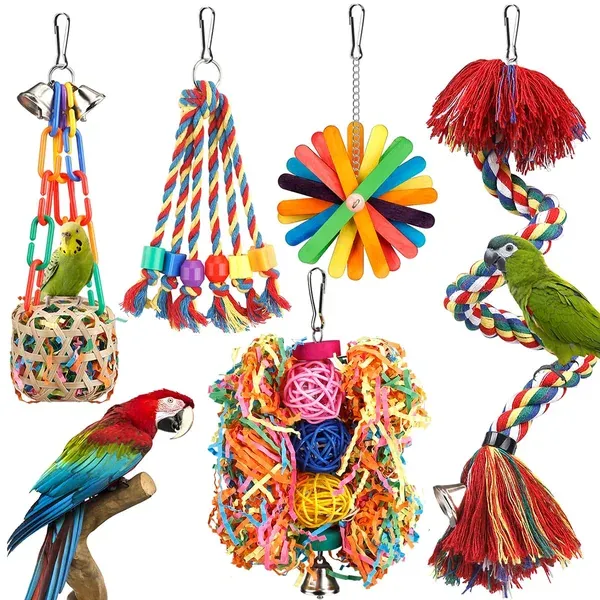
What It Is and Key Specs
The set ships as five individual enrichment pieces designed for small and medium birds — cockatiels, conures, parakeets, budgies, lovebirds, finches, parrotlets, and similarly sized species. According to the manufacturer's listing, the collection includes:
- A hand-woven hanging basket with rattan balls and confetti
- Brightly colored popsicle sticks
- Plastic beads threaded for chewing and batting
- A cotton rope perch for climbing, resting, and chewing
- A bell accent for auditory stimulation
Each piece attaches via included hanging hooks, which the listing describes as quick to clip onto standard cage bars or play-stand hardware. The design intent is multi-layered: visual stimulation from the colors, physical engagement through shredding and foraging, and beak maintenance from gnawing on varied textures.
Readers on Amazon rate the set an aggregate 4.7 out of 5 from 2,534 ratings — a notably high consensus for a multi-piece accessory bundle.
Materials and Build Quality
The manufacturer lists the materials as rattan, wooden blocks, bamboo, bird-safe shredded paper, and plastics — all described as bird-safe and durable enough to "withstand the vigorous chewing habits of parrots." The cotton rope perch is positioned as a comfortable lounging and chewing surface that adds environmental variety.
One practical note from the listing: treats can be hidden inside the foraging toys to extend engagement, which suggests the basket and bead components have enough structural depth to hold small food items during play.
Safety Considerations — Read Before You Hang
This is the section that warrants the most attention, and the published record is consistent on this point. Multiple avian veterinary and husbandry sources raise specific concerns about rope-based bird accessories:
- Currumbin Vet Services notes that veterinary clinics have treated birds for fiber impaction — persistent vomiting, weight loss, and intestinal blockage — traced to tasseled and woven rope toys and perches marketed as "bird friendly." (currumbinvetservices.com.au)
- Lovebirbs.com advises owners to inspect rope toys and perches daily, and to remove any rope accessory immediately if a bird is suspected of swallowing fibers, following up with a veterinarian. (lovebirbs.com)
- A dedicated cordage safety guide at makeyourownbirdtoys.com confirms that even cordage marketed as safe carries risks "if not properly monitored and maintained," and that not all cordage types on the market are appropriate for bird use. (makeyourownbirdtoys.com)
None of this is unique to this product — these are category-level concerns that apply broadly to rope perches and woven accessories across the market. The manufacturer describes the cotton rope perch as bird-safe, but the published guidance above makes clear that the safety of any rope accessory depends heavily on ongoing owner supervision and maintenance, not just material composition alone.
Practical takeaway: Daily inspection for fraying, loose threads, or unraveling is not optional with rope perches — it is the standard of care recommended across avian husbandry sources. Birds that are aggressive chewers or that tend to ingest non-food materials warrant extra vigilance, or may be better served by an all-wood or all-natural-fiber foraging setup with no rope component.
Real-World Fit — Who It Suits, Who Should Skip
Good fit:- Owners of small-to-medium birds (budgies, cockatiels, conures, lovebirds) looking for a variety pack that addresses multiple enrichment types at once
- Bird keepers who can commit to daily visual inspection of rope and woven elements
- Cages with standard wire spacing compatible with clip-on hooks
Consider skipping if:- Your bird is a known fiber-ingester or has a history of gastrointestinal issues
- Your schedule makes daily toy inspection difficult to maintain consistently
- You are managing a very large, powerful chewer (macaw-scale birds) for whom "small/medium" components may not hold up
Honest Limitations
- The cotton rope perch carries the same fiber-ingestion risks documented across this toy category — supervision is mandatory, not precautionary
- Plastic beads, while listed as bird-safe, should be monitored for cracking or splintering over time, as degraded plastic components can present separate hazards
- The listing does not specify rope diameter or fiber twist tightness, both of which affect how quickly a perch frays and how easily a bird can catch a toe or beak — buyers cannot assess this detail before purchase
- Five pieces of varying construction complexity means wear rates will differ; some components may need replacement well before others