What It Is and Key Specs
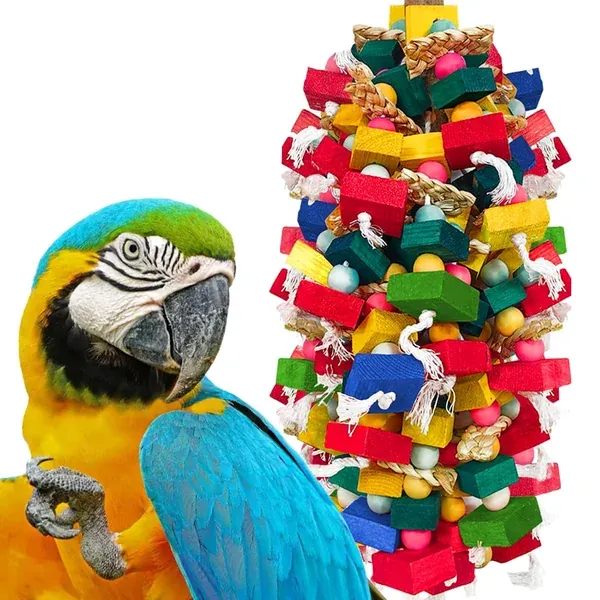
The LuvemPets Extra Large Bird Toy is a cage-mounted activity center designed specifically for large parrots — macaws, cockatoos, and amazons among them. According to the manufacturer listing, it is crafted from untreated natural wood and organic cotton rope, with no added toxins or chemical treatments. The multicolor design is intentional: high-contrast colors are included to stimulate visual curiosity and encourage active beak engagement. Attachment is handled by quick-lock hooks that require no tools, and the manufacturer describes the design as "tangle-free" for straightforward cage installation.
The toy is positioned as a two-in-one enrichment item, combining destructible chewing elements with foraging opportunities — two instinct categories that avian behavior resources and specialty retailers like Super Bird Creations and Bonka Bird Toys consistently identify as essential for large parrots' mental and physical health.
Build Quality and Materials
The manufacturer states the toy is made "100% from safe woods & organic cotton — untreated & toxin-free." For large-parrot owners, material transparency matters: macaws and cockatoos are powerful chewers that can ingest significant amounts of a toy in a single session, so non-toxic construction is a baseline requirement rather than a bonus.
The listing describes the construction as "sturdy" and "durable," built to withstand powerful chewing from extra-large species. The inclusion of secure quick-lock hooks is called out specifically, suggesting the mounting hardware is sized to handle the activity levels of heavier birds. Because this review is based on listing and manufacturer information rather than hands-on assessment, independent verification of long-term durability is not available here.
Real-World Fit: Who It Suits, Who Should Skip
This toy is explicitly sized and marketed for extra-large parrots. Specialty retailers such as Birdie Boutique and Windy City Parrot both categorize macaws, cockatoos, and amazons as birds requiring toys built for their bite strength and size — making the species targeting here well-aligned with established category norms.
Good fit for:- Owners of macaws, cockatoos, or amazons looking for a single toy that addresses both chewing and foraging needs
- Caregivers whose birds show signs of boredom, stress-related feather plucking, or destructive behavior — the manufacturer notes the toy is designed to combat exactly these issues
- Those who want a quick-install solution without tools or complex hardware
Consider skipping if:- You have a small or medium parrot (conures, cockatiels, lovebirds) — the extra-large scale and hook hardware are engineered for larger, more powerful birds
- You prefer a single-purpose toy rather than a combined chew-and-foraging design
- You require third-party or laboratory certification of materials beyond the manufacturer's own toxin-free claim
Category Context
Within the extra-large parrot toy category, destructible natural-wood toys that double as foraging enrichment are a well-established format. Bonka Bird Toys and Super Bird Creations — two prominent category specialists — both emphasize variety across destructible, foraging, and interactive toy types as optimal for large parrots. A product that combines chewing and foraging elements in one unit can serve as a practical starting point for owners building out a toy rotation, though enrichment specialists generally recommend supplementing with additional toy types rather than relying on a single item.
Honest Limitations
- No third-party safety certification is referenced in the listing. The toxin-free and organic cotton claims originate from the manufacturer; buyers seeking independent material verification will need to reach out directly.
- Durability is self-reported. Macaws in particular are among the most destructive chewers in aviculture, and how quickly any wood toy is consumed depends heavily on the individual bird. Replacement frequency — and therefore ongoing cost — is an unknown variable.
- Color fastness is unaddressed. The listing highlights vibrant, high-contrast colors but does not specify the dyes used or how they hold up once chewing begins, which is a reasonable question given how much material a large parrot can work through.
- Foraging complexity is unspecified. The listing describes foraging capability but does not detail how foraging elements are incorporated (hidden compartments, wrapped treats, etc.), making it difficult to assess suitability for birds that have already advanced past beginner-level foraging challenges.