What It Is and Key Specs
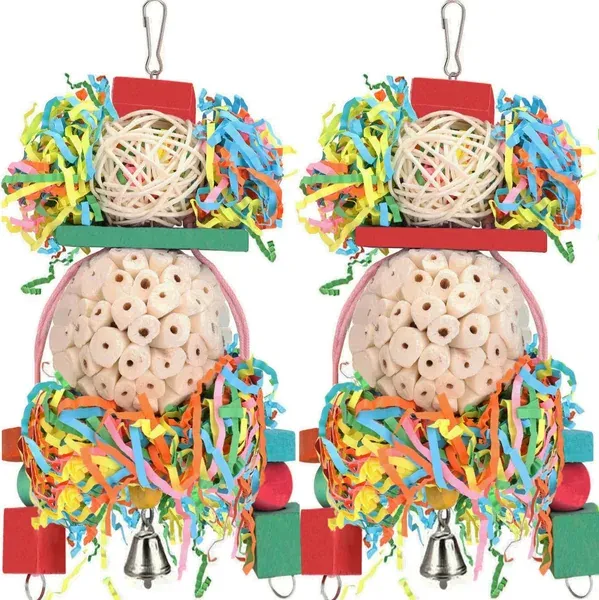
The BBjinronjy Hanging Sola Ball Bird Toys come as a 2-pack aimed at small-to-medium birds including cockatiels, lovebirds, conures, parakeets, budgies, and parrots. Each toy is a handmade hanging assembly combining multiple material types: sola balls (made from the natural stems of the sola plant), rattans, colorful crinkly papers, wooden blocks dyed with edible pigments, and crisp bells. The toys attach to a cage via included quick-link hooks.
The sola ball itself is described by the manufacturer as completely edible and bird-safe — soft, spongy, and roughly midway in consistency between popcorn and balsa wood — making it easy for birds to bite and grip with their feet. The wooden components are colored with edible pigments, a detail worth noting for bird owners who are cautious about dyes.
Build Quality and Safety Considerations
From a materials standpoint, the listing emphasizes that all core components are either natural or food-safe. The sola plant stems are cited as fully edible, and the wooden block colorings are specifically described as edible pigments rather than conventional dyes. The multi-texture design — combining soft sola with harder wood blocks, pliable crinkly paper, and rattans — offers varied sensory engagement in a single toy.
Bird toy safety is a meaningful concern across the category. General guidance from avian safety resources (
bestfriends.org,
superbirdtoys.com) consistently flags entrapment risks — catching a toe or beak in a toy — as one of the most common accident types with hanging bird toys. Owners should supervise initial interactions and inspect toys regularly as components are shredded down. The listing does not specify whether hardware components such as hooks are stainless steel or zinc-free, which is worth confirming, as avian health specialists note that swallowing metal components (not merely beaking them) is the primary pathway for heavy-metal toxicity concerns in parrots.
Real-World Fit: Who It Suits, Who Should Skip
According to the manufacturer, these toys are intended for small-to-medium birds. The foraging design is particularly well-suited to species with active shredding instincts — the listing specifically calls out parakeets and conures as enthusiastic responders, describing birds pulling crinkle paper out immediately and shredding the sola ball persistently once engaged. An added interactive dimension: owners can push small food pieces like almonds or sunflower seeds into the sola ball holes or between components to encourage natural foraging behavior.
Birds that are shy or slow to engage new objects may need a longer introduction period, which is typical across foraging toy categories. Larger parrots — such as macaws or large cockatoos — are not listed as target species, and the soft sola material would likely be destroyed very rapidly by a large bird's beak, reducing the toy's lifespan considerably.
How It Compares in Its Category
Sola ball toys occupy a well-established niche in the bird enrichment market as a softer, more approachable alternative to hardwood chew toys. The multi-element construction here — layering sola with rattan, paper, wood, and bells — is consistent with the broader design trend of combining shredding, foraging, and auditory stimulation in a single hanging toy. The 2-pack format provides backup when the first toy is destroyed, which is a practical inclusion given how quickly active shredders can work through soft materials.
Honest Limitations
Every product in this category has trade-offs, and these toys are no exception:
- Durability by design: Sola balls are intentionally soft and destructible — that is the point — but it means replacement frequency will be high for enthusiastic chewers. Budget for ongoing repurchase.
- Hardware transparency: The listing does not specify the metal composition of the hooks and bell components. Safety-conscious owners should verify this detail, as entrapment and metal-ingestion risks are the most commonly cited concerns in bird toy safety literature.
- Size ceiling: The toy is not recommended for large parrots, limiting its audience to small-to-medium birds.
- No independent lab certification mentioned: The listing relies on manufacturer claims of edibility and safety. Owners with birds that have existing health conditions may want to consult an avian vet before introducing new toys.